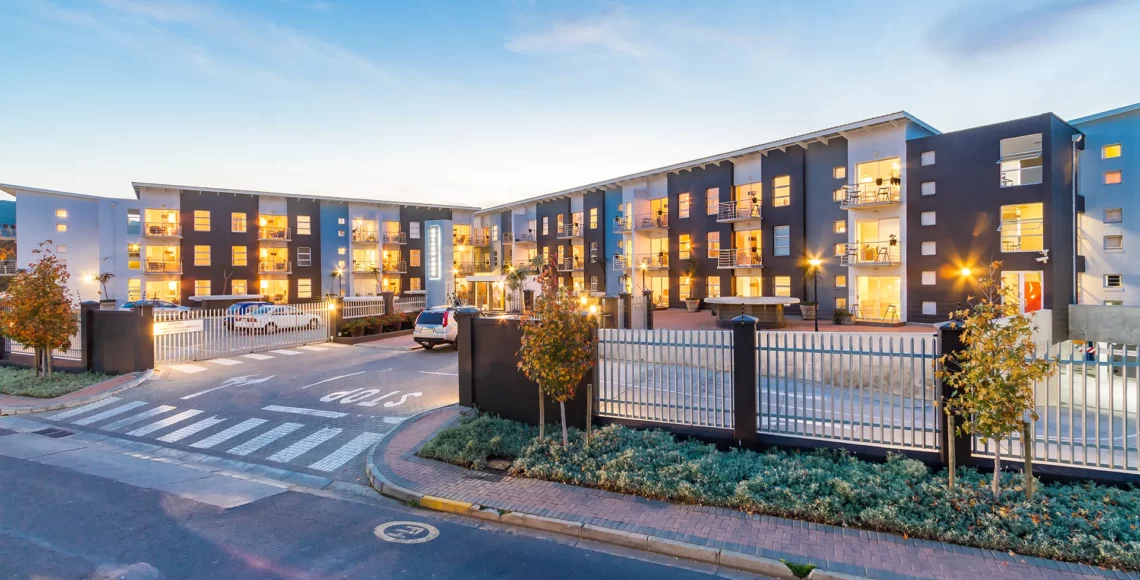
Stellenbosch’s student housing shortage shows little sign of easing

Despite sustained private-sector development and investment, Stellenbosch continues to face a significant shortage of student accommodation, with demand consistently outstripping supply as thousands of students compete for limited beds each academic year.

Stellenbosch University currently provides accommodation for approximately 7,500 students across its residences, yet the institution serves more than 30,000 students. As a result, the majority rely on private accommodation, driving ongoing demand for rental housing throughout the town.

The situation reflects a wider national challenge. Industry estimates place South Africa’s student accommodation shortfall at between 500,000 and 780,000 beds, making student housing one of the country’s most undersupplied property sectors.

According to Ryan Flowers, Managing Director of Flyt Property Investment, the imbalance between student numbers and available accommodation has become a defining feature of the Stellenbosch property market.

“Student accommodation demand in Stellenbosch is not cyclical or seasonal; it is structural,” says Flowers. “Each year, thousands of students enter the private rental market because university residences simply cannot accommodate everyone. While significant investment has flowed into the sector, demand continues to outpace supply.”

The result is a rental market characterised by consistently high occupancy levels, particularly among properties located within walking distance of campus and key transport routes.

Rental demand is also becoming increasingly diversified. Beyond first-year students seeking accommodation, the market is supported by postgraduate, international and returning students, many of whom prefer accommodation outside traditional university residences. “The student accommodation market has matured considerably over the past decade,” says Flowers.

“Students today place a high value on factors such as safety, reliable connectivity, study facilities and convenience. Accommodation providers have had to adapt to these changing expectations while operating in an environment where demand remains exceptionally strong.”

The strength of the market is reflected in rental performance. Industry data indicates that well-located student accommodation in Stellenbosch continues to achieve high occupancy rates and steady rental growth, supported by a limited supply of quality housing stock.

Flyt has observed these market dynamics first-hand through its presence in Stellenbosch, where WINK Aparthotels operates professionally managed student accommodation. According to WINK Aparthotels Managing Director Derick Tait, the sustained demand seen across the market is reflected in day-to-day operations.

“What we’re seeing on the ground is sustained demand rather than seasonal spikes,” says Tait. “Once students find quality accommodation in a good location, they tend to stay for the duration of their studies, and we’re seeing rental growth that reflects that continued demand. It’s not unusual for prospective tenants to join waiting lists well before the start of the academic year, which shows just how much pressure the market for quality, professionally managed student accommodation in Stellenbosch remains under.”

At the same time, Stellenbosch continues to attract investment due to its reputation as one of South Africa’s leading education centres, its exceptional lifestyle appeal — from its historic townscape and café culture to its mountain backdrop and outdoor amenities — and the broader semigration trend towards the Western Cape.

Property market data indicates that residential values in Stellenbosch have continued to record steady growth in recent years, supported by enduring demand, limited land availability and ongoing population growth.

Flowers believes the accommodation shortage is unlikely to be resolved in the near future.

“The question is no longer whether Stellenbosch needs additional student accommodation. The question is how quickly new supply can be delivered to keep pace with demand,” he says. “Universities continue to attract growing numbers of students, but accommodation delivery remains constrained by factors such as land availability, development costs and planning timelines.”

While private-sector investment has helped expand housing options, industry participants agree that no single development can resolve the broader supply challenge facing university towns across South Africa.

“As long as Stellenbosch remains one of the country’s leading university destinations, demand for quality student accommodation is expected to remain a defining feature of the local property market,” says Flowers.

The ongoing imbalance between student numbers and available accommodation suggests that student housing will remain one of the most resilient segments of the Stellenbosch residential market for the foreseeable future.

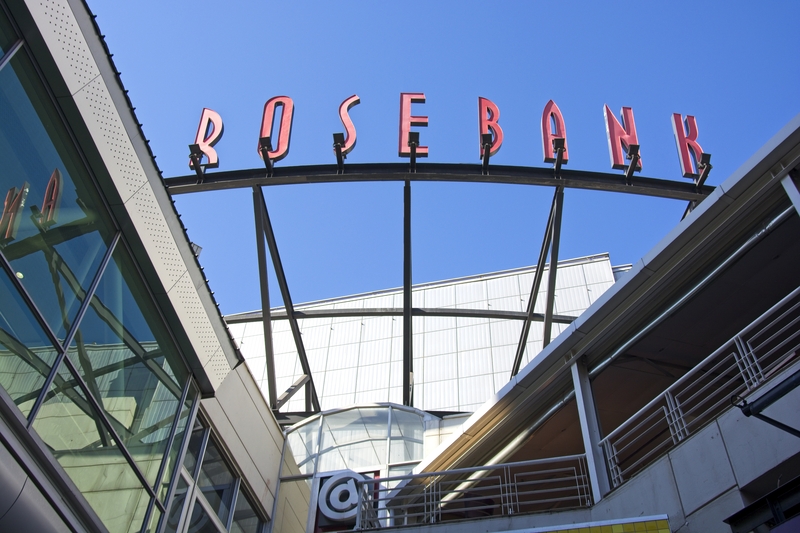
WINK Aparthotels Expands into Johannesburg with New Rosebank Opening

WINK Aparthotels will officially open WINK Aparthotel Saxon Square, its newest aparthotel development in Rosebank, Johannesburg, marking the hospitality group’s expansion into one of South Africa’s fastest-growing urban nodes.

Located on Oxford Road, directly opposite the Rosebank Gautrain Station, the five-storey development brings 80 apartment-style units to the hospitality market in a leafy residential pocket of Rosebank known for its established trees, walkability and proximity to Johannesburg’s commercial and lifestyle hubs.

The development includes a mix of studio, one-bedroom and two-bedroom apartments, all featuring kitchens and balconies. While the majority of the units are fully furnished for short- and medium-term stays, 20 apartments will remain unfurnished to accommodate longer-term tenants seeking a more permanent residential offering.

Unlike the high-rise apartment developments increasingly associated with urban accommodation, WINK Rosebank has been designed with a more residential and community-oriented feel.

“Rosebank continues to evolve rapidly, but there are still very few developments that capture the character of old Johannesburg,” says Derick Tait, Managing Director of WINK Aparthotels. “Saxon Square sits in a quieter, greener part of the suburb surrounded by mature trees and established residential streets. It feels more human and more connected to the neighbourhood than the typical high-density city accommodation model.”

The development forms part of a managed rental pool operated by WINK on behalf of private investors and the developer, creating a hospitality-led investment model aimed at servicing the growing demand for flexible accommodation in Rosebank.

Amenities within the development include a rooftop bar, breakfast room, shared workspace facilities, a WINK Café, swimming pool, communal braai area and undercover basement parking.

The group says the property has been positioned to serve a broad mix of travellers and residents, including business travellers, digital nomads, sports groups, project-based corporate teams and longer-stay visitors looking for a more flexible alternative to traditional hotels or residential rentals.

Rosebank has increasingly been identified as one of Johannesburg’s strongest-performing mixed-use nodes, supported by ongoing commercial investment, transport accessibility and growing demand for rental accommodation linked to both business and lifestyle migration. The area has also attracted a growing number of major corporate headquarters and regional offices in recent years, including Anglo American’s move to 144 Oxford Road, alongside the presence of companies such as BP, PepsiCo South Africa, Sappi, Coca-Cola South Africa, Sasol and TotalEnergies within the broader Rosebank precinct.

According to WINK, projected rental yields for participating investors are forecast at 8.7% in the first year, with projections increasing to approximately 15% by year five. Investors participating in the rental pool are offered a fully managed furnishing and fit-out solution, allowing units to be prepared and operated within the hospitality environment through a simplified end-to-end setup process.

“The demand for flexible accommodation is no longer limited to tourists,” says Tait. “We are seeing growing demand from professionals relocating temporarily, remote workers, travelling teams and people wanting longer stays without the rigidity of traditional leasing structures. Rosebank is perfectly positioned to support that shift.”

The Rosebank launch forms part of WINK Aparthotels’ broader expansion strategy as the group continues to grow its footprint within high-demand urban, student and lifestyle nodes across South Africa.

Is Rosebank, Gauteng a sure investment right now?

The question of where to invest in South African property is becoming less about geography and more about value. While the Western Cape remains a blue-chip market enjoying sustained demand, investor attention is widening to include Gauteng – particularly areas offering a compelling combination of accessibility, amenities and yield. Rosebank is emerging as one of the most notable of these, shaped by strong fundamentals and a maturing urban ecosystem that continues to attract both corporate and residential demand.

According to a recent report by Rainmaker, Gauteng remains South Africa’s economic centre, contributing around 33% of national GDP and 30% of employment, while also recording the highest net migration gains nationally. This concentration of economic activity continues to support demand for residential property in well-located urban locations.

The area has seen sustained development across residential, commercial and mixed-use projects, positioning Rosebank as one of Johannesburg’s most established high-density urban centres.

Flyt Property Investment, historically focused on the Western Cape market, is among those expanding their footprint. The group has identified Rosebank as a strategic investment hotspot, partnering with LivRES, the developers of Saxon Square, to launch its latest aparthotel offering through its hospitality brand, WINK Aparthotels. Located on Oxford Road in Rosebank, Saxon Square is a mixed-use development comprising over 150 residential units, positioned within one of Johannesburg’s most active commercial and lifestyle precincts.

“Cape Town continues to deliver strong performance and remains an important part of our investment strategy,” says Ryan Flowers, Managing Director of Flyt Property Investment. “At the same time, we’ve been assessing opportunities in Gauteng, and Rosebank stands out for its accessibility, infrastructure and its potential to deliver consistent rental demand.”

The divergence between regions is also shaped by broader market dynamics. The Western Cape has benefited from consistent municipal performance, infrastructure reliability and a strong tourism-driven economy, all of which have supported sustained property demand. By contrast, parts of Gauteng have experienced more uneven growth, with investor sentiment at times influenced by concerns around municipal delivery and infrastructure reliability.

Well-performing areas such as Rosebank, already known for its established schools, walkable streets and vibrant retail appeal, are beginning to stand out within this context, supported by concentrated investment and strong corporate demand.

That shift is visible in the corporate footprint of the area. In recent years, a number of major companies have either relocated to or consolidated offices within Rosebank, including Anglo American, which moved its global headquarters to the centre, as well as Standard Bank, Allan Gray and TotalEnergies. The continued growth of precincts such as Oxford Parks has further attracted blue-chip tenants, reinforcing Rosebank’s role as a key commercial hub.

What’s increasingly bolstering the investment case is the strength of the rental market. Vacancy rates in Rosebank have declined from over 15% in 2021 to around 8% by late 2025, pointing to improving occupancy and consistent demand for well-located units.

This is translating into a more compelling buy-to-rent proposition, with recent industry insights pointing to gross rental yields of between 11% and 13%, supported by strong occupancy and corporate-driven demand.

In nodes like Rosebank, demand for short-term and aparthotel-style accommodation is also becoming a more visible part of the market mix.

Recent data reflects this broader momentum. Rosebank recorded a 53% increase in transaction volumes since 2023, placing it among Johannesburg’s strongest-performing suburbs over the past two years. The area has also attracted a notable share of international buyers, with foreign purchasers accounting for 19% of transactions between early 2024 and 2025.

“Investors are increasingly focused on areas where people can live, work and access amenities within a single urban district,” adds Flowers. “Rosebank aligns with that shift, particularly for buyers looking at long-term rental income.”

The Rainmaker report further points to strong underlying fundamentals supporting the node. Household incomes in Rosebank have increased by approximately 171% since 2011, reinforcing ongoing demand.

From a development perspective, investment into Rosebank remains consistent.

“There has been sustained capital investment into Rosebank across both commercial and residential sectors,” says Alan Dinne development director at LivRES. “The presence of large corporates, combined with continued infrastructure upgrades, is reinforcing its role as a key urban centre within Johannesburg. It’s not just about lifestyle anymore – it’s about opportunity, affordability and long-term stability.”

All indicators suggest that Rosebank is transitioning into a more mature, high-density mixed-use urban pocket, with growth expected to continue as development activity stabilises and demand remains steady.

For property investors looking for value in Johannesburg, Rosebank is emerging as one of the most attractive opportunities in the current market cycle.