Responsible Short‑Term Rentals: Protecting Cape Town’s Heritage Neighbourhoods and Tourism Economy

Cape Town’s tourism sector has evolved into a diverse mix of accommodation options ranging from traditional hotels, owner-managed Airbnbs and professionally operated aparthotels—serving holidaymakers, digital nomads, international visitors, Meetings, Incentives, Conferences and Exhibitions (MICE) delegates and the broader events industry. While this evolution has expanded visitor choice and fuelled new economic opportunities, it has also placed pressure on residential communities and intensified calls for clearer, more accountable management of short-term rentals.

The rapid rise of these short-term rentals has undeniably boosted Cape Town’s tourism economy, creating new streams of income and diversifying accommodation options. Yet the sector has increasingly come under scrutiny as residents and hospitality stakeholders raise concerns about affordability, neighbourhood character and responsible tenant oversight. This evolving hybrid accommodation market now demands a more cohesive regulatory framework—one that recognises both the economic importance of tourism and the necessity of protecting heritage neighbourhoods and long-term residents.

Cape Town remains an international destination of exceptional standards, consistently attracting travellers seeking immersive cultural experiences. Among its most distinctive attractions, Bo-Kaap stands out as a globally recognised heritage precinct.  Its vibrant cultural fabric, historic streetscapes and irreplaceable identity make it a neighbourhood that must be preserved, even as visitor demand grows.

Bo-Kaap’s enduring appeal perfectly illustrates the delicate balance between cultural preservation and tourism growth. As visitor demand rises, the role of short-term rentals becomes central to Cape Town’s visitor economy. In 2023, more than 700 000 travellers used short-term rental platforms in the city, contributing billions of rand to the tourism value chain. Industry data indicates that a single short-term rental unit in Cape Town achieved a median 71% occupancy rate between August 2023 and July 2024, generating more than R420 000 in gross income over the year. Communities like Bo-Kaap stand to benefit from this economic momentum—but only if growth is channelled responsibly and in partnership with residents.

The rapid expansion of the sector has also reshaped housing dynamics. A City of Cape Town Local Spatial Development Framework report found that approximately 70% of inner-city units are now operating as hotels or short-term rentals, significantly reducing long-term residential availability. As listings increase, so too do calls for structured, accountable and community-aligned management.

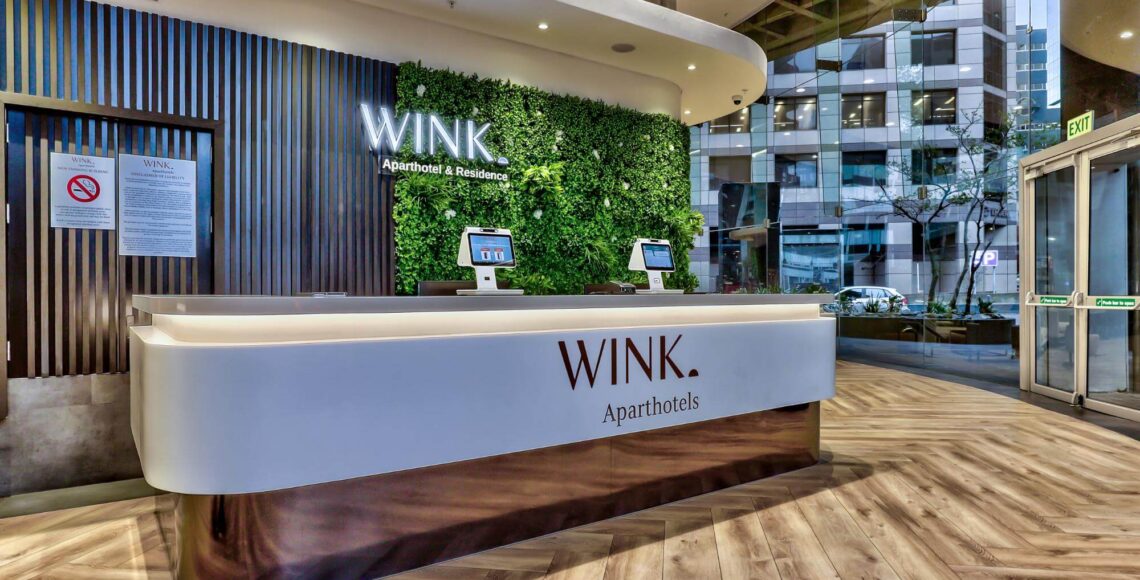
Ryan Flowers, Managing Director of Flyt Property Investments, emphasises that short-term rentals must actively contribute to neighbourhood resilience if they are to be sustainable: “A short-term rental should contribute meaningfully to its surroundings. It’s not simply accommodation—it’s an opportunity to showcase the culture, spirit and unique fabric of an area in a way that brings shared benefit. When operators take this responsibility seriously, the impact is tangible: local eateries draw more foot traffic, independent retailers gain momentum and micro-economies begin to flourish. Our work at Eaton Square in Cape Town’s Southern Suburbs demonstrates this clearly. Through our hospitality management brand, WINK Aparthotels the development has been managed in a way that attracts complementary businesses that now serve both residents and visitors, strengthening the neighbourhood rather than disrupting it.”

Flyt has intentionally designed its Bo-Kaap development at 150 Buitengracht to mirror this integrated model, collaborating extensively with the local community during the development’s design phase. With 70% of units already sold before public release, the mixed-use development will be managed by WINK Aparthotels to ensure consistent standards, professional oversight, community engagement and alignment with the cultural and heritage values of Bo-Kaap. The objective is to create a responsible hospitality presence that brings economic activity to the area while safeguarding what makes the neighbourhood unique.

Flowers adds that progress must be collaborative: “Bo-Kaap’s heritage is irreplaceable. Its preservation must sit at the centre of how tourism and development evolve in the area. Regulation, operators, residents and the tourism sector need to move in the same direction. When short-term rentals are professionally managed and aligned with community priorities, they can add genuine value to neighbourhoods rather than placing them under strain.”

As one of Cape Town’s most important economic drivers, tourism can only remain sustainable if its benefits are shared and its impacts carefully managed. Moving ahead, meaningful collaboration between short-term rentals, hotels, community representatives and local businesses will be essential to ensure that neighbourhoods remain vibrant, resilient and culturally intact.

City of Cape Town Approves 150 Buitengracht Development After Rigorous Redesign and Community Collaboration

The City of Cape Town has officially approved the 150 Buitengracht development by Flyt Property Investment, bringing to a close a rigorous multi-year process marked by extensive design revisions, heritage considerations, and community collaboration.

Originally launched in 2021, the project has evolved significantly in response to public engagement, heritage concerns, and insights raised by the Bo-Kaap Civic and Ratepayers Association. Situated at 150 Buitengracht Street, the development lies adjacent to the culturally significant Bo-Kaap and the historic Auwal Masjid, which prompted heightened scrutiny and a high level of design sensitivity to preserve the integrity of the area.

“The engagement process reflects a remarkable effort by the facilitators, Bo-Kaap community representatives, and the developer,” said the City of Cape Town’s Municipal Planning Tribunal (MPT). “It resulted in consensus on the form the development should take.”

A facilitation process led by the South African Heritage Resources Agency (SAHRA) between 2022 and 2023 resulted in a substantial redesign, documented in a 63-page report dated 30 June 2023. The revised proposal reflects significant adjustments aimed at preserving the integrity of the Bo-Kaap’s heritage while addressing community concerns.

Key changes include:

ElementPre-facilitation ProposalCurrent Proposal
Maximum Height8 storeys6 storeys (reduced by 6.6m)
Buitengracht Street Façade5 storeys3 storeys (40% less)
Site Coverage652m²493m² (24% less)
Floor Factor3.93.6
Total Floor Area2,586m²2,385m² (201.5m² less)

The City found the final design to be “context-sensitive,” striking a careful balance between modern urban renewal and the preservation of Cape Town’s unique cultural and architectural heritage.

“This has been a long and rigorous process,” said Ryan Flowers, Managing Director of Flyt Property. “But we are proud to have worked alongside the City, the Bo-Kaap community, and heritage bodies to ensure 150 Buitengracht honours its surroundings while adding value to the urban fabric of Cape Town.”

Flyt Property Investment has committed to creating a thoughtfully designed mixed-use building that blends with its environment while meeting the needs of a modern, vibrant city. The project will feature:

  • 67 residential units, ranging from studios to two-bedroom apartments
  • Ground-floor retail spaces, fostering a dynamic streetscape
  • A rooftop restaurant and entertainment area, offering panoramic views of Table Mountain and the city
  • Secure underground parking, ensuring convenience for residents and visitors

The City of Cape Town praised the process in its final remarks, stating: “The concerted and meaningful effort to accommodate residents’ concerns has resulted in a context-sensitive development that both protects heritage and promotes sustainable development.”

In his endorsement, Executive Mayor Geordin Hill-Lewis commented, “This is a positive and important milestone. The project is a model for how we can manage sensitive infill development that meets our city’s growing housing and business needs without losing the essence of who we are. The outcome reflects how collaboration can shape a more inclusive and heritage-aware Cape Town.”

With final authorisations now confirmed and all appeals now concluded, construction of 150 Buitengracht is expected to commence later this year, with completion targeted for 2026.

Eaton Square prepares units for COVID 19 quarantine stays

Flyt Property Investment’s recently launched Eaton Square in Diep River has made units available to those affected by COVID 19. These new, furnished apartments have been suitably sanitised and prepared for immediate occupation.

Preference will be given to those who qualify to be quarantined (returning from high risk countries), medical professionals or those who have been adversely affected by restricted travel plans, with units being available on a daily or weekly basis at significantly reduced rates.

Located in the heart of Constantia Valley, Eaton Square is close to top medical facilities (Constantia Medi Clinic and Tokai Melomed) and within 5 mins of Constantia Emporium and Contantia Village, should guests need any essentials or medical attention.

Eaton Square already has a meal delivery service available to tenants, fast and stable WiFi connectivity as well as a weekly cleaning service.

“As newcomers to the community we wish to help in any way we can during this crisis,” says Ryan Flowers, Sales and Development Manager at Flyt Property Investment.

Get in touch using one of the links below:
www.eatonsquare.co.za
ryan@flytproperty.co.za
http://airbnb.com/h/eatonsquare104
https://www.airbnb.com/rooms/41545988?s=13&shared_item_type=1&virality_entry_point=

Eaton Square prepares units for COVID 19 quarantine stays

Flyt Property Investment’s recently launched Eaton Square in Diep River has made units available to those affected by COVID 19. These new, furnished apartments have been suitably sanitised and prepared for immediate occupation.

Preference will be given to those who qualify to be quarantined (returning from high risk countries), medical professionals or those who have been adversely affected by restricted travel plans, with units being available on a daily or weekly basis at significantly reduced rates.

Located in the heart of Constantia Valley, Eaton Square is close to top medical facilities (Constantia Medi Clinic and Tokai Melomed) and within 5 mins of Constantia Emporium and Contantia Village, should guests need any essentials or medical attention.

Eaton Square already has a meal delivery service available to tenants, fast and stable WiFi connectivity as well as a weekly cleaning service.

“As newcomers to the community we wish to help in any way we can during this crisis,” says Ryan Flowers, Sales and Development Manager at Flyt Property Investment.

Get in touch using one of the links below:
www.eatonsquare.co.za
ryan@flytproperty.co.za
http://airbnb.com/h/eatonsquare104
https://www.airbnb.com/rooms/41545988?s=13&shared_item_type=1&virality_entry_point=

Investors make the most of Section 12J Tax Incentive

The close of the 2020 financial year this February brought a scramble of last-minute investors through the Section 12J gates, angling for that most welcomed tax rebate. Cape-based Flyt Property Investment saw their rate of capital raising double within the last week of February as investment into their Flyt Hospitality Fund caught the attention of property investment group FWJK. A total of R170million has been raised since the launch of the fund in November last year, with R80million subscribed within the last week.

Zane De Decker, managing director at Flyt Property Investment, says that his team was burning the midnight oil, processing a flurry of investors into their fund. “We finally see that investors are responding to this incredible incentive provided by SARS. 100% of your tax back should be a no-brainer and good quality hospitality property, as an underlying investment, is a winning combination,” he says. “We’ve taken our time in formulating an attractive investment and lowered our entry-level in order to cast our net wider, allowing more investors the option of jumping onto the bandwagon.”

Flyt Property Investment’s hospitality fund entry options have been particularly appealing to investors looking to cash in on the 12J incentive. The fund managers, together with 12J specialists Anuva Investments, introduced a loan option whereby the total investment amount can be subscribed via a structured bridging loan. Flyt provides qualifying investors with an interest-free loan with a fixed administration fee of 2,5%. Pretty competitive if one compares most bridging finance in South Africa, available at between 12% to as much as 20% interest on the loan amount.

Many of the last-minute contributions came by means of international property group FWJK who found the structure to be a worthwhile tax benefit for their investors and co-developers. FWJK has developed property assets to the value of R8 billion and is most noted for their residential, medical, commercial and industrial property developments and, more recently, the Zero to One development touted to be Cape Town’s tallest building. Of their 49 total developments, three are apartment hotel developments located in KZN’s Umhlanga and the Cape Town suburbs of Sea Point and Clifton, and available to investors via the Flyt Hospitality Fund. This recent move into the 12j space has resulted in these projects being close to 100% sold.

Commenting at a 12J closing event this week, Dave Williams Jones, CEO of FWJK, said, “We expect the number of investors into this fund to grow exponentially as the benefits of investing via Flyt’s Section 12J fund and specifically in FWJK products becomes more widely known.”

Section 12J of the Income Tax Act was introduced in 2009 by the South African Government to encourage South African taxpayers to invest in local companies and receive a 100% tax deduction of the value of their investment. Flyt Property Investment introduced its Section 12J hospitality offering to investors in November 2019.

Eaton stakeholders

Flyt launches Eaton Square, Diep River

The long-awaited launch of Flyt Property Investment’s mixed-use development, Eaton Square in Diep River, Cape Town, was recently held on the first floor deck of the property. A celebration of the completion of the 2-year-long project was enjoyed by the building contractor GVK-Siya Zama as well as stakeholders, investors and buyers. Two of the completed furnished apartments were made available for viewing.

Over the last few years, Cape Town’s historic suburb of Diep River has been flagged by property experts as a promising urban renewal node. Its ideal location – proximity to schools, public transport (Metro Rail’s Southern Line as well as major bus routes), hospitals and shopping centres – makes it an ideal prospect for new families and up-and-coming professionals.

Eaton Square offers 66 sectional title 1- or 2-bedroom apartments, all with undercover parking. Architect Sebastian van Greunen has included beautiful communal areas, a first-floor rooftop entertainment deck, a co-working coffee shop/restaurant that will offer residents a meal service, and a private dining room that residents can book for entertaining guests.

All units have been designed with the ‘plug and play’ or co-living concept front of mind, as explained by Flyt’s managing director Zane De Decker. “Over the last two years we have researched worldwide trends, worked extensively with property professionals and consulted the best, most forward-thinking minds in the business to truly trailblaze a new take on the modern-living concept. We want our residents to have the option of arriving with a suitcase and literally plugging in.” With this in mind, Flyt are offering a fully managed solution to investors, which delivers efficiently designed ‘shareable’ apartments, tried and tested furniture packs, up-to-date technology, and rental management with flexible rental options (days, weeks, months) –  all suited for investors who would like to purchase with the intention of renting the unit out for optimal returns.

Units are also available to purchase in Flyt’s Section 12 J venture capital tax incentive fund that offers South African taxpayers a 100% tax deduction on the amount invested.

Purchasing and managing an investment property – a few fundamentals

Granted, the property market, especially in Cape Town CBD, has been given a shot in the arm thanks to short and medium-term-type rentals and the success of student accommodation, Airbnb, Bookings.com and the likes, but believe me, managing and making a favourable ROI on a second or third property is not a walk in the park. Getting it right, though, can be one of the best investments you ever make.

The trouble is, many investors are left wondering if they’ve left it too late: is the sector saturated, is the season over? To be honest, those who got in early have certainly reaped rewards, but what we don’t hear about is that many a ‘school fee’ has been paid on route. The buy-to-let rental market is a whole new ball game, and investors should make sure their recipe for success is fool-proof.

Being in the property game, we’ve done our homework and researched this South African market extensively. In fact, our research got us so excited; we have actually set aside a number of our apartments at Eaton Square in Cape Town to service that market specifically. We’ve selected the most suitable units, carefully selected a suitable furniture pack and refined our offering, partnered with rental operators and developed an exceptional investment for those who are looking for a managed solution. Our property development team has brainstormed with some of the most experienced and best minds in conceptualising a turnkey solution for those hands-off investors who are looking to sit back and enjoy the fruits of this excellent investment option. However, for those who’d like to fly solo, I’d recommend you make sure of a few fundamentals:

Access

Although location is important, it’s evident that the rental market is also looking for great access – walking distance to transport, coffee shops, restaurants. Seems like a no-brainer but many investors make the mistake of selecting an address above access.

Easy-peasy does it

Tenants are looking for slick, easy access with the least amount of rules, regulations, paperwork and a hassle-free process. Swift check-ins, no running around, 10 thousand phone-calls later meeting the friend of a friend who has got the key.

Services

Make sure you’ve got great Wi-Fi, there’s enough connectivity for television and cable services and parking is available.

Furniture

Yip, be prepared that your furniture is going to have a shelf-life and that pretty is not going to cut it. We’ve included a furniture pack in our units at Eaton for this reason precisely. Although you might be tempted to splash out and decorate, we’ve seen plenty of cash go out the window with bad furniture purchases

Security

Visitors are always sceptical and cautious of the area they are staying in and whether it’s safe (and so they should be). A few security checks won’t do you any harm – find out if there’s a neighbourhood watch and what the crime rate is like. Also, make sure your tenants are aware of any security concerns.

The bottom line is, if you set yourself up properly and you don’t mind managing the process yourself (trust me, it’s time–invasive and time-consuming), there’s no reason not to go it alone. If, however, you’d prefer the ‘package deal’, find a reputable developer who has, like us, done their homework and ticked off all the boxes.

Anuva Investments launch Section 12J hospitality fund with property partners Flyt Property Investment

Anuva Investments, South Africa’s first Section 12J company, have announced the launch of a new fund available, allowing for diversification from traditional 12J private equity into the property sector via a hospitality fund created in partnership with Cape-based property developer Flyt Property Investment.

The 12J tax incentive introduced by SARS in 2009 was intended to stimulate growth in the SMME sector and ultimately lead to job creation. Historically these investments have been limited to venture capital and, in some cases, business rescue opportunities with traditional property investments not qualifying as VCCs. Investing in a qualifying 12J company requires that the company holds assets that qualify under the Act; the only property assets that qualify are those that create jobs in the hospitality sector, for example, hotels or managed accommodation properties.

The Flyt and Anuva partnership, launched as Flyt Hospitality Fund, will issues shares in selected qualifying property developments. Two Cape Town developments have been structured into the fund which issues shares giving the holder access to all the benefits of the property.  A minimum investment of R1million is required and can be made via private investor, trust, stokvel, investment syndicate or company. The investment is locked for a period of five years without any disbursements, after which shareholders can opt to remain in the structure and depending on performance, benefit from a passive income via quarterly dividend payouts.

Speaking at the launch of the fund, Zane De Decker, Managing Director of Flyt Property Investment, said: “Part of our success has been our ability to identify a good opportunity, so when 12 J hit our radar, we immediately pursued the structure as an option for our investors.”

He also quoted impressive statistics from The Western Cape Government, confirming that for every R1million invested in 12J structures, 4.1 jobs have been created in South Africa.   “It’s important for us to achieve returns in every sense. Not only do we want to achieve attractive financial yields, but it is also essential that we uplift local businesses, improve the built environment and facilitate positive progress in the areas we work in.”

Also at the launch was Neill Hobbs, CEO and founder of Anuva Investments, who said that their investment mandate with Flyt Property Investment is to invest in quality hospitality opportunities. “Together with the team at Flyt, our strategy is to find outstanding opportunities in the property sector: good quality, strategically located properties with a focus on sectional-title serviced apartments and student accommodation. We have worked closely with Zane De Decker and are optimistic at the potential this diversification will offer our investors.”