Responsible Short‑Term Rentals: Protecting Cape Town’s Heritage Neighbourhoods and Tourism Economy

Cape Town’s tourism sector has evolved into a diverse mix of accommodation options ranging from traditional hotels, owner-managed Airbnbs and professionally operated aparthotels—serving holidaymakers, digital nomads, international visitors, Meetings, Incentives, Conferences and Exhibitions (MICE) delegates and the broader events industry. While this evolution has expanded visitor choice and fuelled new economic opportunities, it has also placed pressure on residential communities and intensified calls for clearer, more accountable management of short-term rentals.

The rapid rise of these short-term rentals has undeniably boosted Cape Town’s tourism economy, creating new streams of income and diversifying accommodation options. Yet the sector has increasingly come under scrutiny as residents and hospitality stakeholders raise concerns about affordability, neighbourhood character and responsible tenant oversight. This evolving hybrid accommodation market now demands a more cohesive regulatory framework—one that recognises both the economic importance of tourism and the necessity of protecting heritage neighbourhoods and long-term residents.

Cape Town remains an international destination of exceptional standards, consistently attracting travellers seeking immersive cultural experiences. Among its most distinctive attractions, Bo-Kaap stands out as a globally recognised heritage precinct.  Its vibrant cultural fabric, historic streetscapes and irreplaceable identity make it a neighbourhood that must be preserved, even as visitor demand grows.

Bo-Kaap’s enduring appeal perfectly illustrates the delicate balance between cultural preservation and tourism growth. As visitor demand rises, the role of short-term rentals becomes central to Cape Town’s visitor economy. In 2023, more than 700 000 travellers used short-term rental platforms in the city, contributing billions of rand to the tourism value chain. Industry data indicates that a single short-term rental unit in Cape Town achieved a median 71% occupancy rate between August 2023 and July 2024, generating more than R420 000 in gross income over the year. Communities like Bo-Kaap stand to benefit from this economic momentum—but only if growth is channelled responsibly and in partnership with residents.

The rapid expansion of the sector has also reshaped housing dynamics. A City of Cape Town Local Spatial Development Framework report found that approximately 70% of inner-city units are now operating as hotels or short-term rentals, significantly reducing long-term residential availability. As listings increase, so too do calls for structured, accountable and community-aligned management.

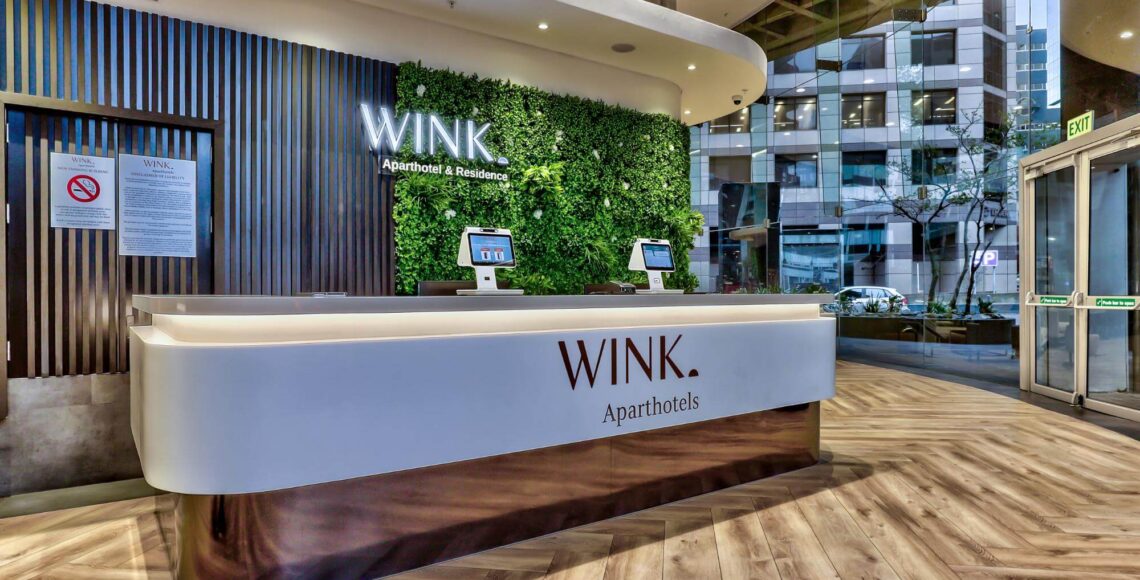
Ryan Flowers, Managing Director of Flyt Property Investments, emphasises that short-term rentals must actively contribute to neighbourhood resilience if they are to be sustainable: “A short-term rental should contribute meaningfully to its surroundings. It’s not simply accommodation—it’s an opportunity to showcase the culture, spirit and unique fabric of an area in a way that brings shared benefit. When operators take this responsibility seriously, the impact is tangible: local eateries draw more foot traffic, independent retailers gain momentum and micro-economies begin to flourish. Our work at Eaton Square in Cape Town’s Southern Suburbs demonstrates this clearly. Through our hospitality management brand, WINK Aparthotels the development has been managed in a way that attracts complementary businesses that now serve both residents and visitors, strengthening the neighbourhood rather than disrupting it.”

Flyt has intentionally designed its Bo-Kaap development at 150 Buitengracht to mirror this integrated model, collaborating extensively with the local community during the development’s design phase. With 70% of units already sold before public release, the mixed-use development will be managed by WINK Aparthotels to ensure consistent standards, professional oversight, community engagement and alignment with the cultural and heritage values of Bo-Kaap. The objective is to create a responsible hospitality presence that brings economic activity to the area while safeguarding what makes the neighbourhood unique.

Flowers adds that progress must be collaborative: “Bo-Kaap’s heritage is irreplaceable. Its preservation must sit at the centre of how tourism and development evolve in the area. Regulation, operators, residents and the tourism sector need to move in the same direction. When short-term rentals are professionally managed and aligned with community priorities, they can add genuine value to neighbourhoods rather than placing them under strain.”

As one of Cape Town’s most important economic drivers, tourism can only remain sustainable if its benefits are shared and its impacts carefully managed. Moving ahead, meaningful collaboration between short-term rentals, hotels, community representatives and local businesses will be essential to ensure that neighbourhoods remain vibrant, resilient and culturally intact.

City of Cape Town Approves 150 Buitengracht Development After Rigorous Redesign and Community Collaboration

The City of Cape Town has officially approved the 150 Buitengracht development by Flyt Property Investment, bringing to a close a rigorous multi-year process marked by extensive design revisions, heritage considerations, and community collaboration.

Originally launched in 2021, the project has evolved significantly in response to public engagement, heritage concerns, and insights raised by the Bo-Kaap Civic and Ratepayers Association. Situated at 150 Buitengracht Street, the development lies adjacent to the culturally significant Bo-Kaap and the historic Auwal Masjid, which prompted heightened scrutiny and a high level of design sensitivity to preserve the integrity of the area.

“The engagement process reflects a remarkable effort by the facilitators, Bo-Kaap community representatives, and the developer,” said the City of Cape Town’s Municipal Planning Tribunal (MPT). “It resulted in consensus on the form the development should take.”

A facilitation process led by the South African Heritage Resources Agency (SAHRA) between 2022 and 2023 resulted in a substantial redesign, documented in a 63-page report dated 30 June 2023. The revised proposal reflects significant adjustments aimed at preserving the integrity of the Bo-Kaap’s heritage while addressing community concerns.

Key changes include:

ElementPre-facilitation ProposalCurrent Proposal
Maximum Height8 storeys6 storeys (reduced by 6.6m)
Buitengracht Street Façade5 storeys3 storeys (40% less)
Site Coverage652m²493m² (24% less)
Floor Factor3.93.6
Total Floor Area2,586m²2,385m² (201.5m² less)

The City found the final design to be “context-sensitive,” striking a careful balance between modern urban renewal and the preservation of Cape Town’s unique cultural and architectural heritage.

“This has been a long and rigorous process,” said Ryan Flowers, Managing Director of Flyt Property. “But we are proud to have worked alongside the City, the Bo-Kaap community, and heritage bodies to ensure 150 Buitengracht honours its surroundings while adding value to the urban fabric of Cape Town.”

Flyt Property Investment has committed to creating a thoughtfully designed mixed-use building that blends with its environment while meeting the needs of a modern, vibrant city. The project will feature:

  • 67 residential units, ranging from studios to two-bedroom apartments
  • Ground-floor retail spaces, fostering a dynamic streetscape
  • A rooftop restaurant and entertainment area, offering panoramic views of Table Mountain and the city
  • Secure underground parking, ensuring convenience for residents and visitors

The City of Cape Town praised the process in its final remarks, stating: “The concerted and meaningful effort to accommodate residents’ concerns has resulted in a context-sensitive development that both protects heritage and promotes sustainable development.”

In his endorsement, Executive Mayor Geordin Hill-Lewis commented, “This is a positive and important milestone. The project is a model for how we can manage sensitive infill development that meets our city’s growing housing and business needs without losing the essence of who we are. The outcome reflects how collaboration can shape a more inclusive and heritage-aware Cape Town.”

With final authorisations now confirmed and all appeals now concluded, construction of 150 Buitengracht is expected to commence later this year, with completion targeted for 2026.

Cape Town CBD property market sees surprisingly high demand

Investment into Cape Town’s CBD property market seems to be enjoying the first signs of post-pandemic optimism, with buyers keen to get in on the action, notably in the buy-to-let space. Justin van der Poel, investment consultant at Flyt Property Investments who are currently marketing units at One Thibault off Long Street, says that the sales team has been pleasantly surprised at the interest and closing rate of units in the development.

The firm initially offered units to investors via their popular Section 12J Flyt Select fund, which accounted for the majority of sales, but van der Poel says that the units have been popular since the expiry of SARS’s Section 12J tax incentive. Speaking at a media site inspection of the property, van der Poel confirmed the ongoing activity: “We continue to see strong interest week in and week out with only 20 units of the 167 still available,” he said.   “The sales team have achieved 31 sales in the past three months, bringing the total sales up to 147 since we launched off-plan in May.” Show units will open this week and the team are expecting a further uptick in sales.

With currently as many as six new developments or refurbished buildings on offer in Cape Town’s CBD, Property Fund Manager Ryan Flowers says that the success at One Thibault can be attributed to the competitive selling prices and Flyt’s offering. “We could definitely say that the view has a lot to do with it, but our product offering at One Thibault is extremely attractive to investors,” he explains. Flyt have stuck to their Section 12J hospitality structure, with investment into One Thibault wrapped with on-site hospitality management company, WINK ApartHotels, taking care of rental management and administration. Entry level into their studio apartments kicks off at R895 000 where an expected rental return on Investment of 6-7%.

Residential apartments, which start from the fifteenth floor of the historic building, are almost complete and studio, one- and two-bedroom units are available for viewing. The property has been designed to include co-working space, laundry facilities, an on-site restaurant, a swimming pool and roof deck, reception and concierge as well as storage space, parking and high-speed internet.   

WINK ApartHotels opens One Thibault to guests

One Thibault, a familiar icon of Cape Town’s skyline will open its aparthotel facilities to the travel industry on 1 November 2022.  The property was recently redeveloped to incorporate co-working commercial space, city apartments and will now include an accommodation-offering by WINK ApartHotels.

Cape-based management company, WINK ApartHotels has commenced with the management of 102 rooms at One Thibault, ranging from studio apartments, to one- and two-bedroom units, situated on floors 15 to 20 of the building. Units are all fully kitted to be self-catering, a popular option for short and long- stay guests and plans are in the mix to develop food and beverage offering within the next few months. General Manager and hotel specialist, Peter van Rensburg says that booking enquiries have already been excellent and interest in the units is high as the city enjoys a tourism recovery phase thanks to the so-coined post Covid ‘revenge travel’. “One Thibault wins the location race hands down, and the breathtaking views which can be enjoyed from every unit available are going to make many an Instagram story,” he said.

Towering over the CBD, One Thibault enjoys access to all that Cape Town has to offer; the natural amenities of Table Mountain, the nearby leisure parks, beaches, and vineyards; all enjoyed with the convenience of being in the city. The property is within walking distance of the Cape Town Convention Centre, is on the MyCity Bus route, and neighbours some of Cape Town’s best restaurants and nightlife in the famous Bree Street vicinity (La Parada, Sza Sza and Villa 47  to name a few).

One Thibault Square, originally known as the BP Centre was completed in 1972 and was designed with a 34-degree diagonal twist, which puts it on a north–south axis which means that all the facades have views of either the mountain or the harbour. WINK One Thibault is the tallest residential building in Cape Town and the hotel accommodation-offering, with its contemporary decorated apartments make the most of these panoramic views of the vibrant city and all it has to offer.

Opening rates start at R1120 per room per night and bookings can be made at www.winkaparthotels.co.za

Ends

________________________________________________________________________________________

About WINK ApartHotels

The WINK Aparthotels group manages a collection of trendy aparthotel properties throughout Western Cape, South Africa. The group currently manages four properties; WINK Foreshore, which is situated in Cape Town’s CBD, WINK Eaton Square, in the southern suburbs of Diep River, WINK Quivertree which services the student market in Stellenbosch and more recently WINK One Thibault, towering over Cape Town’s CBD.

WINK Aparthotels provides travellers with the convenience of apartment living, the comfort,  and luxury and convenience of a hotel.

Website          :           http://winkaparthotels.co.za  

Email               :           info@winkaparthotels.co.za  

Flyt Property Investment and TriStar Construction join forces on Rosebank development

Flyt Property Investment have negotiated a partnership with TriStar Construction at the recently launched Saxon Square.   Situated in Rosebank, Saxon Square is Flyt Property’s first managed development in Johannesburg and their partnership with TriStar translates into an appealing investment opportunity for investors looking for a comprehensive short-term hospitality rental management solution with excellent returns.  

Flyt’s Development Manager, Ryan Flowers says, “We believe in adding value to property through joint ventures and we’re very happy to be involved in creating this investment opportunity with TriStar on a really outstanding development.”

Saxon Square’s 134, fully-furnished studio and one-and two-bedroomed apartments will offer tenants the privacy and comfort of apartment living along with all the conveniences and services of a hotel – suitable for business and leisure travellers looking for short- and long-term rental options with easy access to transport links, retail outlets, restaurants and bars.  Amenities include a 24-hour concierge, biometric access control, coffee shop, rooftop garden and co-working lounge. Utility costs are low, with eco-friendly and cost-saving elements built into the design.

Flyt’s management team will oversee all functions required to run a unit including the paying of levies, and rates and taxes on the owner’s behalf, with on-site management being taken care of by the group’s long-standing management partner and Aparthotel specialists, WINK Aparthotels.  Additionally, with a Flyt-managed VAT refund claim, investors will receive 40% of the VAT on their purchase price back in the first year, in cash, providing investors with a bonus cashflow of 6%; the remainder of the VAT is used to fund the furniture pack and fit-out costs which means that the investor is  not out of pocket.

“The property’s location, excellent price point (with no transfer costs) and great returns combined with our on-site rental management option makes investment into Saxon Square a smart buy,” states Flowers.

Property investment firm provides a waiting room for Section 12J opportunities

Property investment firm provides a waiting room for Section 12J opportunities

Cape-based investment property specialists, Flyt Property Investment, have made investment into hospitality property accessible for future projects via their Section 12J finance-facility fund, the Flyt Partnership 2022 fund. Subscription to the fund will provide investors access to the Section 12J tax-break before the 30 June cut-off, and allow them to park the funds while they wait for new projects to come on board.

The Section 12J tax incentive, which expires on 30 June 2021, could very well see South African investors suffering the “you don’t know what you’ve got, until it’s gone” blues, as last-minute realisations seem to have hit the investment arena. Investors eager to make use of the final opportunity SARS is affording taxpayers are looking to sign on any dotted Section 12J line, as the 100% tax deduction is the latest must-have item in any up-to-date investment portfolio.

Described by specialist Section 12J firm Anuva Investment’s Neill Hobbs as “hands down the best tax-saving opportunity imaginable”, the Section 12J incentive was introduced by SARS and treasury in 2009, as a means to boost investment into small-to-medium-sized enterprises and, in doing so, stimulate the economy and improve job creation. The incentive initially received little attention, as it seemed limited to the extremely wealthy and out-of-reach for average investors. However, as experts began to realise the nature and merits of the opportunity, so too did smart portfolio and investment managers and, over the last 8 years, the Section 12J sector has developed some attractive investment products. In response, property and Section 12J specialists married the handsome tax deduction with clever hospitality-suited property ownership and a new 12J asset class caught the eye of traditional investors.

However, at the eleventh hour, many Section 12J funds are pulling out all the stops to attract investors, and the scurry for last-minute offerings might result in an “anything goes” scenario, as fund managers hustle for attractive options. Ryan Flowers, Fund Manager at Flyt Property Investment, warns that investors should tread carefully as they shop for 12J investments, and make sure they are confident in the fund manager and happy with their underlying investment. The firm have sold out of their initial Section 12J hospitality property investment options leading up to the 2021 tax season deadline and have since received considerable interest in their ancillary tranche of property ownership via 12J at Cape Town’s One Thibault and The Upper East Side hotel apartments in the Woodstock area.

Flowers explains that the popularity of their offering was due largely to the finance facility offered through their Flyt Partnership Fund, which was fully subscribed and sold out of 3 developments by SARS’s February deadline. The Flyt R190 million-strong Partnership Fund provided investors with the funds to invest upfront while they waited for their tax refund. “The problem with any Section 12J investment is that you need the cash upfront to invest in order to receive the tax certificate and then the tax refund,” he points out. During a recent webinar Flowers announced that due to demand from current investors the firm has launched a 2022 Partnership Fund. “The Flyt Partnership Fund 2022 is aimed at making sure investors don’t miss out on the final Section 12J tax rebate, with a simple 5% deposit while they wait for the next Flyt project to come onboard. We enable qualifying investors to finance the portion of their 2021 income or company tax in our Section 12J fund and wait in the wings for the next exceptional Flyt property investment to become available, essentially providing a very easy way to make a 12J investment while acting as a tax cushion by shielding investors from their next tax contribution, without rushing in,” he stated.

According to the firm the Partnership Fund has, to date, saved investors R60 million in tax which has been used to acquire hospitality properties. Subscriptions to the 2022 fund will be capped at R300 million, and investors can contribute via their R2.5 million allowance for individuals or R5 million company allowance.

Property investment firm provides a waiting room for Section 12J opportunities

Afrirent Holdings acquires Flyt Property’s WINK Aparthotels

Looking to broaden their hospitality offering into South Africa, WINK Aparthotels, part of Flyt Property Investment group, a property development and investment team, has been acquired by Afrirent Holdings (Pty) Ltd a Level-1BEE 100% black, female- owned company, via its subsidiary  Indalo Hotels and Leisure, effective 1 May 2021.

“The primary driver for the acquisition is to see growth beyond Cape Town for the WINK brand and to become a major player in the serviced apartments and long-stay markets,” explains WINK General Manager Lauren Barnard.    WINK’s focus on international trends specific to the modern traveller ensures that its aparthotel offering ticks all the boxes in terms of innovation, functionality and accessibility, offering short- and long-term accommodation solutions catering to domestic and international business and leisure travellers, digital nomads and migrant workers.

WINK Aparthotels currently operates two locations: WINK Foreshore and WINK Eaton Square in Dieprivier, with an additional two new properties in the pipeline.  The recently launched WINK Cafe eateries will also provide an excellent add-on to their offering.

CEO of investment house Afrirent Holdings Senzo Tsabedze says that besides being a perfect fit for the Group’s business model, the main aim is to elevate the WINK Aparthotel brand and roll out its offering throughout South Africa.    The company structure and management will largely remain the same, falling under the leadership of Barnard and her team, working closely with hospitality industry veteran Andrew Rogers, CEO at Indalo.

Commenting on the sale, Zane de Decker, MD of Flyt Property Investment, states that the launch of WINK in 2019 with a view to providing a modern, new hospitality offering to the industry to operate and manage properties in the group’s highly successful 12J property investment portfolio, despite Covid restrictions and enormous pressure on the hotel sector, has seen WINK grow into a successful hospitality management company.  “The sale of the business to Afrirent via Indalo, whose focus is on high-end international and domestic tourism and travel, is a solid decision that will benefit both WINK and its shareholders and see the brand flourish even more,” he comments.

WINK Aparthotels will continue to operate and manage all future properties in the Flyt Property Investment portfolio in Cape Town.

Sold Out – property sector gets a boost, thanks to tax break

Property sales in the first quarter of 2021 enjoyed a significant boost thanks to SARS’ Section 12J tax incentive. Demand for investment opportunities into qualifying property developments that include hotels, lodges, student residence or serviced apartments resulted in some developers selling out all units via the Section 12J structure. Qualifying section 12J investments offer individuals, trusts and companies resident in South Africa a tax rebate on investments (up to 45% for individuals), if made through an approved venture capital company.

Cape-based Flyt Property Investment reported that all units at Eaton Square in Diep River, WINK Aparthotels in the CBD precinct of The Foreshore, and Stellenbosch student accommodation development, Quivertree, sold out over 150 units via their structured fund, managed by Section 12J specialist fund managers, Anuva Investments.  Fund Manager, Ryan Flowers details that his sales team saw significant interest in their 12J structured products with a flurry of investors signing up once Finance Minister Tito Mboweni announced that the incentive would not be extended beyond the June cut-off.  “There was keen interest in our Flyt Select and Partnership funds whereby investors can take part in the 12J incentive, enjoying 100% tax deduction when investing in either a specific sectional title unit individually, or share in the ownership of a number of units along with Flyt and other investors/partners,” Flowers explains.

The popularity of the fund can largely be attributed to the 100% loan facility that has been made available to investors and taxpayers who do not have the finance upfront. A 5% deposit secured the investment; and a loan was made available for the balance to qualifying taxpayers while waiting for their SARS refund. This loan is repaid partly by the investor’s tax refund from SARS and the balance settled either in cash or with a replacement home loan.

Zane de Decker, CEO of Flyt Property Investment says that for anyone interested in property investment, there really is no better time to take advantage of this remarkable incentive. “Investors have the unique opportunity to allow SARS to put down the deposit on their property investment for them (up to 45% depending on the investor’s tax bracket). This not only aids in investors’ cashflows upfront but has huge implications on interest savings as in most cases the required home loan is significantly reduced, boosting property rental cash flows further.  For those investing cash this equates to major discount on the purchase price of the unit,” he points out.

The Section 12J scheme expires on 30 June 2021, thereby affording interested investors one last opportunity to receive the tax deduction via a qualifying investment.  The industry expects huge interest in the final period; Flyt Property Investment will soon launch 3 new projects that will be made available to investors via their Section 12J products.

How was it for you?

A date with the tax man for any Section 12J investor is a satisfying rendezvous. The morning after SMS is reason for many a refreshing smile; who would’ve thought we’d ever be saying “Thank You, SARS”? We’ve had a flurry of new, delighted investors who invested in our Section 12J offerings before 29 Feb this year contacting us, citing very pleasing tax return calculations, many reporting a few extra 0000s on this year’s refund.

If you’re not one of those ‘in the know’ – investment into a Section 12J registered fund qualifies for a 100% tax refund. So, in simple terms, 100% of what you invest is deducted from your taxable income by SARS via the Section 12J scheme.  This is one of government’s effective efforts to stimulate the SMME sector while simultaneously creating jobs. Any amounts invested into venture capital 12J companies receive a share certificate together with a tax certificate, allowing the invested amount to be deducted from the investor’s taxable income, in the year that the investment is made.

The Section 12J Industry Association recently reported that, pre-COVID, the incentive has since its introduction in 2009 stimulated R9.7 billion in investment and created 10 500 jobs. At Flyt, we know for sure that our investors’ funds have not only created jobs, but, more importantly, kept people working in these hard-hitting times. Kudos to SARS, the scheme is working!

But back to the money. Let’s say you fit into the 45% tax bracket and decided to invest R1million into a Section 12J approved fund. That R1million rand is deducted off your taxable income and therefore R450 000 will be refunded to you by SARS.  Yes, initially you’re going to have to come up with the lump sum to invest and pay over your tax as you would normally do (or you can chat to us about our Partnership Fund – a solution to the capital outlay problem), but once the year is up, you’ll be one of those receiving the extra zeros on your SARS refund.  If we put it in the context of a Flyt property purchase: if you purchase a unit via a Section12J fund – let’s work on a purchase price of R1.8m – you can be refunded by SARS as much as 45% of your investment amount (depending on your tax bracket). On a R1.8m purchase, that’s R810k saving as you walk through the door.

Sounds like there must be a catch somewhere, I agree, but if we have to find one, it’s this: In 2017 SARS limited, a previously uncapped, investment to R2.5 million per annum for individuals and R5million for companies. A sunset clause has also been introduced, making Section 12J only available until 30 June 2021. That means investors only have 2 more tax seasons (unless the industry is successful in its rally to have the incentive extended) to benefit from the incentive.

Invest in rousing South African companies instead of paying tax – where do I sign, you say?

Introducing Quivertree – a trendy, new mixed-use development in Stellenbosch

Cape-based Flyt Property Investment has announced the official launch of Quivertree, a trendy new property offering in the university town of Stellenbosch, featuring 102 self-catering, fully-furnished apartments for long- and short-term rentals or for purchase, geared not only for the student market also but for young professionals, transient  workers and business travellers.

Shoe-box living and hostel-like halls of residence are a thing of the past, with recent property trends paving the way for next-level accommodation that encompasses clever use of space, furnished offerings, shared work and living areas, on-site amenities, hospitality services and security.  “We wanted to create self-catering pods with all the extra bells and whistles for students, businessmen, golfers and everyone in between!”  says Zane de Decker, MD of Flyt Property Investment.

Quivertree is a 3-storey, mixed-use development that is a blend of student accommodation and short-term stays, bolstered by a strong corporate market comprising 102 studio/one- and two-bedroomed, fully-furnished apartments, some with balconies.    On-site services include a laundry, housekeeping, 24-hour security, a reception desk, underground parking and communal entertainment areas.  WINK Café, launching next  year will serve breakfast, lunch and dinner daily, providing a cool space to catch up with friends, do some work or make a few calls – all made eaiser with complimentary, uninterrupted wi-fi.

Quivertree’s location is super-convenient with Stellenbosch city centre just a 5-minute drive away and is in close proximity to the University’s campuses.  Cape Town International Airport and both national roads are all within a 20-minute radius – added to which the town is abuzz with shops, restaurants, cafes, boutiques, galleries and museums, and, of course, its wine routes.

De Decker adds that with price points starting at R979 000, Quivertree definitely makes for affordable living in Stellenbosch.  All 102 apartments are up for sale through the group’s Section 12J Hospitality Select Fund, making this an even more attractive investment, what with the associated tax breaks and benefits.    Furthermore, a rental pool, managed on-site, will give investors a hassle-free, hands-off investment.